In AI marketing, "open" has become an almost empty word: it gets applied to models with very different licenses, some permissive, others with precise commercial restrictions. Before building a product or service on an "open" model, it's worth reading what that actually means in that specific case.
Open-weight is not open-source
Most models called "open" release the trained weights, not the training code or the data used to train them. The technically correct term is open-weight: you can run the model, partially inspect it, and adapt it, but you cannot reproduce its training from scratch. It's a distinction that matters most when you need to demonstrate, in an audit, exactly how a system was built.
The main licenses and what they permit
- Apache 2.0 or MIT (used by several Qwen and Mistral models): among the most permissive, free commercial use, few restrictions.
- Llama Community License: permits commercial use but with specific conditions — for example, thresholds tied to monthly active users beyond which a separate license from Meta is required.
- Gemma license: commercial use permitted but with acceptable-use clauses that must be respected.
- Research-only licenses: some models, especially newer or experimental versions, are released for research use only, not commercial use.
Why it matters for a business, not just for a lawyer
The risk isn't theoretical: a license that prohibits or limits commercial use, if ignored, exposes the company to a contractual breach that may only be discovered years later, once the system is already part of core processes. You should also check redistribution rights (can you embed the model in a product you sell?) and rights over a fine-tuned model (who owns the weights resulting from your own fine-tuning?).
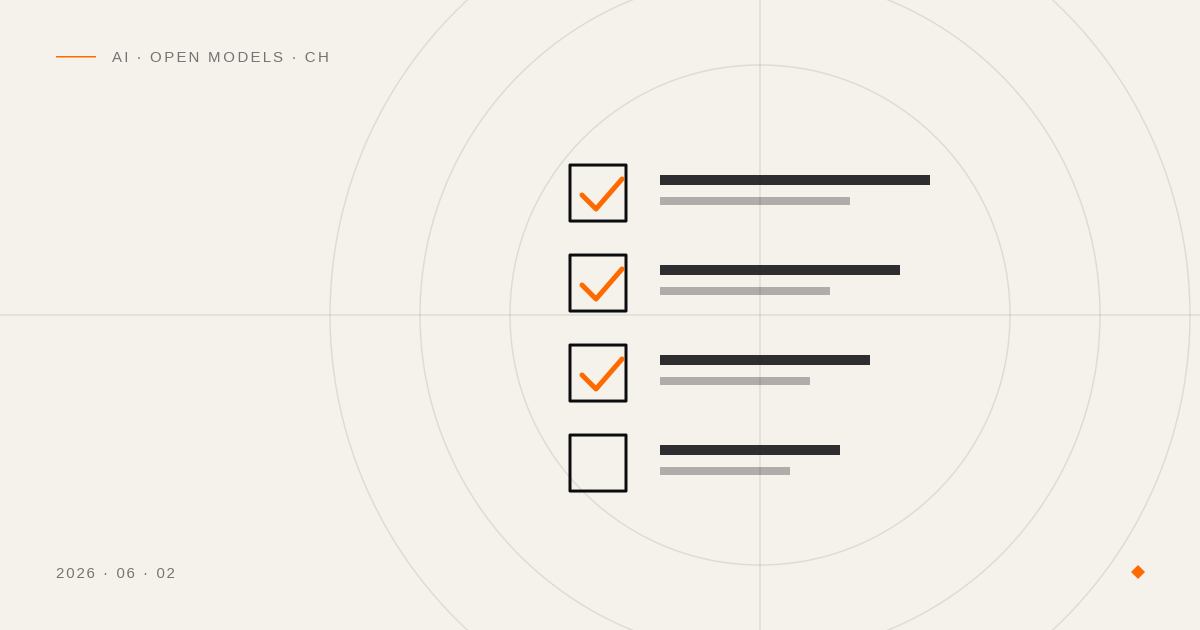
The checklist we apply before adopting a model
- Is commercial use explicitly permitted under the current license, not an earlier version of the model?
- Are there thresholds (users, revenue, volume) beyond which the license changes?
- Is fine-tuning permitted, and who holds the rights to the resulting weights?
- Is redistribution permitted within a product or service offered to third parties?
None of these checks slow a project down if done at the start. They do slow it down — and cost far more — if skipped and discovered later.